B
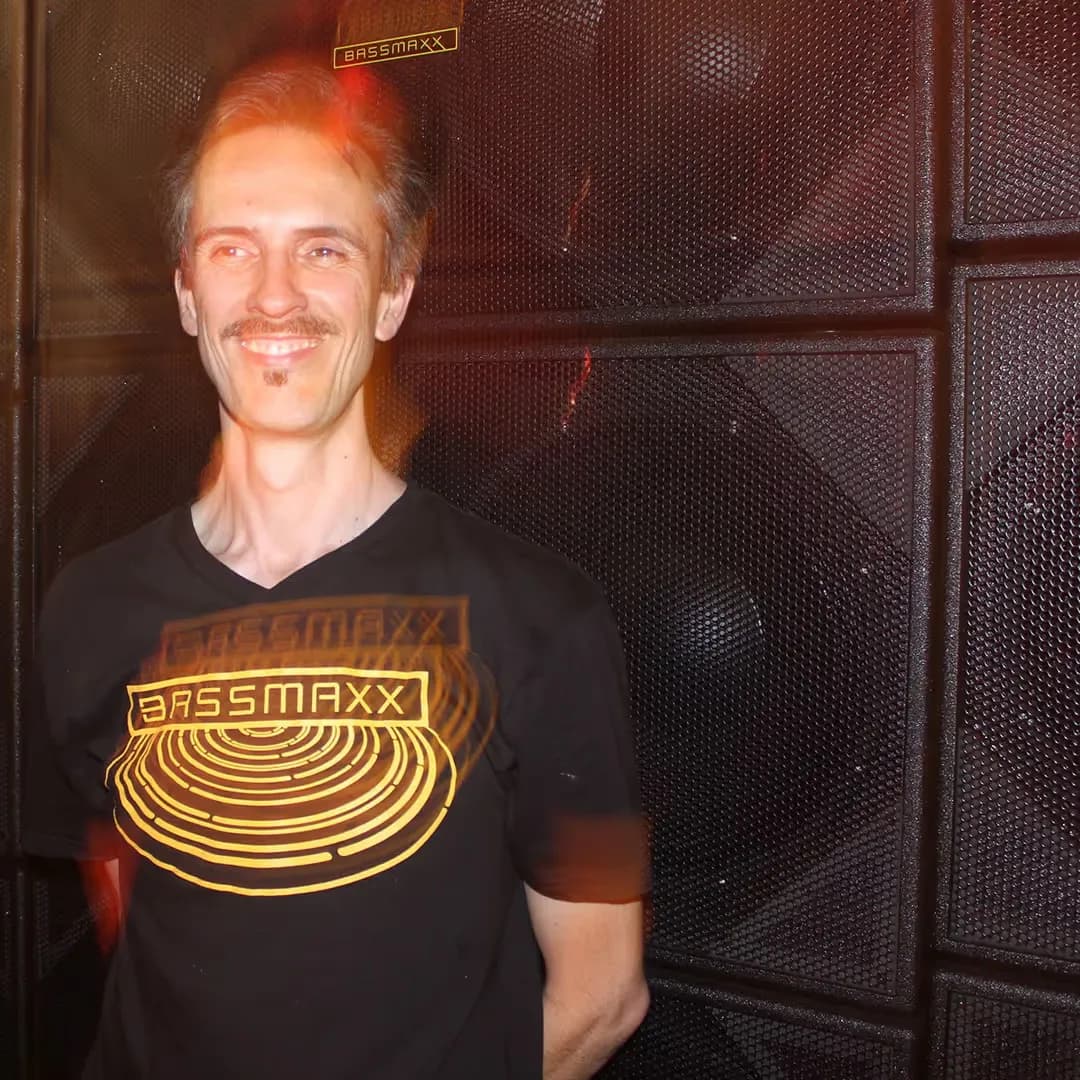
Founder · Designer · President
David Lee
Three decades in audio. One question that has never changed: what if club sound could match the best hi-fi systems, only much louder, with a magnitude more bass?
Origins
From South Africa to America
David arrived in America at 14, leaving South Africa with his family. Growing up under apartheid, witnessing its inequity and oppression, shaped what would later become the BASSBOSS design philosophy: a value-consciousness that comes from doing more with less.
“We were not rich, so I learned many ways to do more with less. I discovered it was preferable to buy high-quality products rather than something cheap but unreliable. I simply couldn’t afford disposable.”
That principle, ruthlessly eliminating anything that disappointed, by poor performance or poor service, became the foundation of how he chooses components today.
The Path
Hi-Fi by day, Clubs by night
David’s audio career began at 19, in the high-end home hi-fi and car audio business. By day he listened to the best home audio systems on the market. By night he absorbed the best of club sound. The contrast led to a question that would define his career.
“What if club audio could sound like the best hi-fi systems? Clear and true as those, only much louder, and a magnitude more bass.”
In the mid-80s, David began installing club systems. Over hundreds of designs and installations, he was constantly seeking solutions for smoother sound and more, deeper, cleaner bass.
1999
Founding the company
In 1999, David launched the company that would become BASSBOSS. The early years focused on horn-loaded subs, an attempt to deliver extreme output at low frequencies when amplifiers were expensive and woofer excursion limits forced the architecture.
As technology evolved, David transitioned to vented, combination, and hybrid designs. Amps got smaller and more powerful. Woofers became more capable. And the music itself was changing, dropping lower in frequency and demanding more from the systems built to reproduce it.
Philosophy
Specs that speak the truth
David has long argued that the pro-audio field is marred by misleading specifications. Manufacturers take advantage of buyers’ lack of acoustic training to cherry-pick numbers that misrepresent capability.
“Just as I feel all people deserve a great education and equal opportunities, I believe that all customers deserve to have a level playing field of reproducible, defendable specifications that reflect the actual capabilities of the speakers.”
BASSBOSS specifications are deliberately conservative. When David can’t demonstrate a product in person, he spends time clarifying how and why it’s superior, in specifics, not adjectives.
2008 Onward
Total control of the chain
For years, BASSBOSS sold passive subwoofers and made recommendations on amplification and processing. If customers ignored the recommendations, the results were inconsistent. Blown drivers. Mismatched processors. So David made the call to move BASSBOSS to powered, processed systems exclusively.
“I couldn’t deliver the hi-fi aesthetic at very high levels, reliably and consistently, without control over the whole system.”
The Profundo Powered subwoofers entered production in 2008. To date, no customer has burned a voice coil. In a market not known for restraint, that’s the proof of the engineering bet.
Today
Austin R&D. Malaysian Build. Worldwide.
BASSBOSS operates out of Austin, Texas. R&D, prototyping, acoustic testing, and final voicing all happen at the Manchaca Road facility. Manufacturing is handled by a dedicated team in Malaysia, led by CE Lim, who oversees every step of the build to BASSBOSS specs.
The entry-level mobile DJ line David teased years ago has materialized. Products like the DJ18S, BB15, VS21, and SSP118 bring the BASSBOSS hi-fi-at-volume aesthetic within reach of working DJs without sacrificing the intensity that defines the brand.
At the high end, BASSBOSS builds for festivals, touring production, and the venues that take sound seriously. The MK3 platform, third-generation amplification with 96 kHz DSP and Milan AVB networking, is the technical culmination of three decades spent solving for one thing: extreme bass without compromise.
The Long Bet
Extreme bass, the new frontier
David’s bet from the start was that extreme bass would become the new frontier. The low-frequency content of modern music has gotten deeper year after year, as artists and producers stretch the bottom end of what they’re willing to commit to a record.
“The music is changing faster than the industry. We fully intend to lead the industry in meeting this demand.”
David still answers technical questions directly. Still oversees the final voicing of every product. Still believes the same thing he believed at 19, standing in front of the best home audio systems on the market: that club sound can match it. Only much louder. With a magnitude more bass.
Talk to the team.
We design systems consultatively. Tell us about your gigs, your venue, your goals. We’ll build the rig that fits.