Signal Daisy Chaining: Connect As Many As You Want
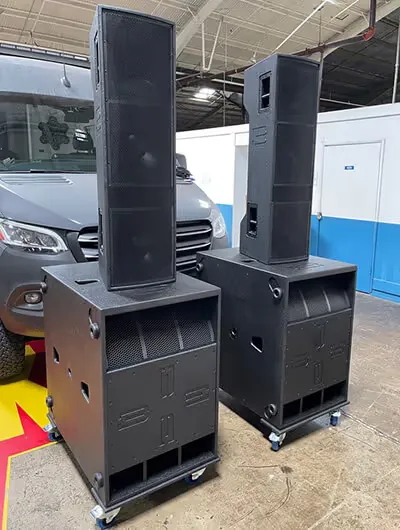
Yes, you can daisy chain as many speakers as you want regarding signal — that is simply a passthrough connection. It's recommended to daisy chain per channel, start with subs, and move to tops at the end. This is primarily for cable management reasons and not because it affects the signal.
Power Daisy Chaining: The Quick Answer
Connect subs directly to outlets. Use power passthrough for tops if needed.
Power Daisy Chaining: The Full Explanation
Every outlet has a maximum rated current. Every connector has a maximum rated current. Every breaker has a maximum rated current. The most that can be drawn down a single daisy-chain is limited by the item with the lowest rating. In the USA that's usually a 15A outlet or plug.
Based on the voltage you're using (120V is the norm in the USA), add up the average current draw ratings for each speaker you intend to connect and stop when you reach 15A.
Subs vs. Tops: Why They Draw Power Differently
In general, subwoofers draw closer to their rated current than tops. Tops often draw a very small fraction of their rated current. This leads to some practical choices:
- Always connect subwoofers directly to outlets and daisy-chain to tops last
- If power is limited, always account for all the current required for subs first
- Power for tops can be shared with subs with less concern for reaching connector limits
Why Amps Can Pull More Than They Put Out
Audio has dynamic range and the average density of music content is about 12%. The average current required to run an amplifier that plays music is about 1/8 the current required to deliver maximum SPL. Current draw safety requirements for connectors and breakers are based on average throughput — so the connectors have headroom.