The Physics Problem with Horn-Loaded Subwoofers
Horn-loaded subwoofers have real advantages: high sensitivity, punchy transient response, and impressive SPL from a compact driver. For many applications they're the right call. But physics sets a hard ceiling on what a horn-loaded sub can do in a portable package, and that ceiling becomes obvious when you need real low-frequency extension.
The fundamental issue is horn path length. To properly load a driver down to 30 Hz, a horn needs a minimum acoustic path of 9.4 feet from driver to horn mouth. Shorter than that, and the horn becomes increasingly transparent to low frequencies: it stops horn-loading the driver and the output becomes uneven and peaked.
This isn't a design flaw. It's wave physics. The horn has to be large enough for the acoustic wavelength to develop. At 30 Hz, that wavelength is roughly 37.5 feet. The horn mouth needs to be large enough to radiate that wavelength efficiently, and the path long enough to maintain the pressure buildup that gives the horn its sensitivity advantage.
4×: The Rule That Changes Everything
Every octave you want to go lower multiplies your problems by four. To go one octave deeper than your current design:
• You need 4× the driver excursion (or 4× the cone area) • You need to displace 4× the air • You need 4× the amplifier power to maintain the same SPL • Your cabinet volume requirements roughly quadruple
This is why a horn-loaded sub that does an honest job at 40 Hz becomes a piece of furniture when you try to get it to 30 Hz. The math doesn't bend because you want it to.
Vented designs escape this trap by using the cabinet's resonant tuning to boost output at and below the port frequency, effectively borrowing acoustic output from the room rather than fighting physics with size. A well-designed vented hybrid can achieve extension that would require a much larger horn, at a fraction of the footprint.
What "Flat to 30 Hz" Actually Requires from a Horn
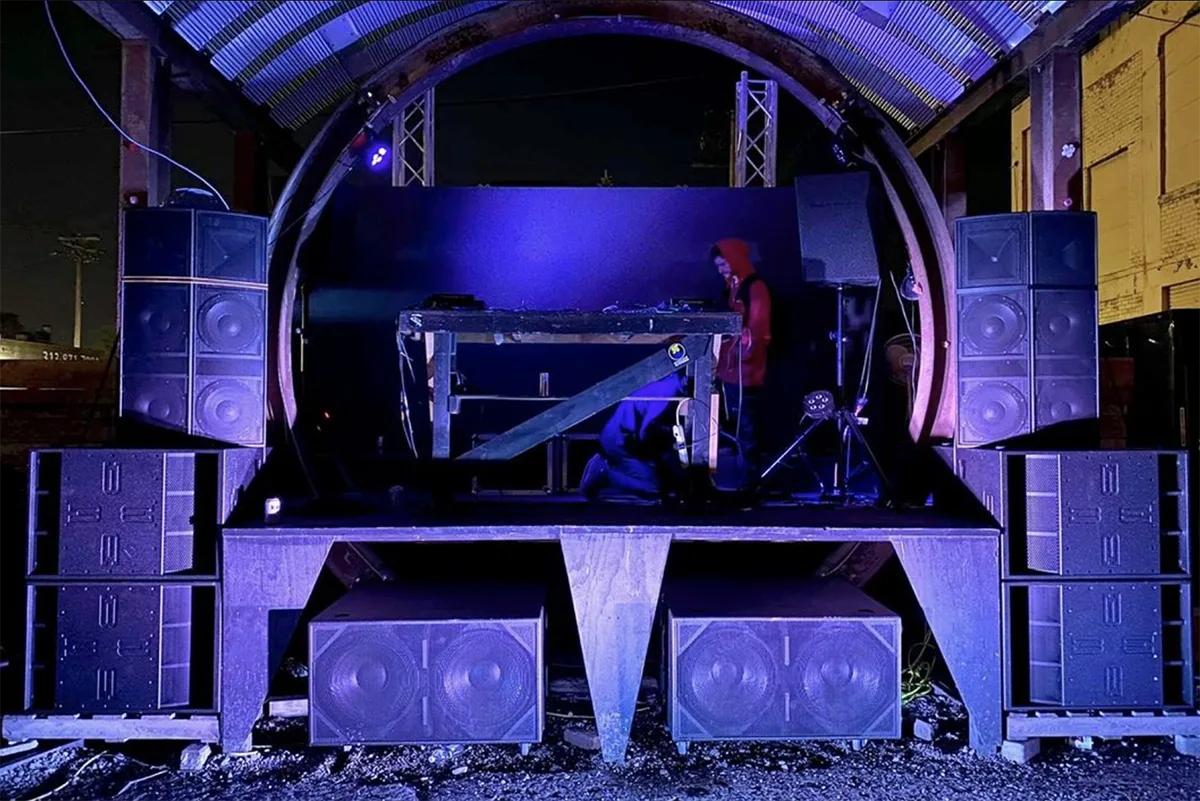
To achieve flat output at 30 Hz from a horn-loaded subwoofer array, you need approximately a 6 ft × 6 ft wall of cabinets: the radiating perimeter required to efficiently launch a 37.5 ft wavelength into the room.
Two or three well-designed vented cabinets achieve the same frequency extension. Roll them in on their carts, plug in, play. The horn wall is a two-truck load, a crew of four, and a four-hour setup.
This is why venue sound designers and production companies that need genuine sub-30Hz extension have moved toward vented and bandpass hybrid designs. Not because horns aren't excellent, they are, but because physics makes the full-bandwidth horn solution impractical outside of permanent large-format installations.

What Vented Hybrid Designs Get Right
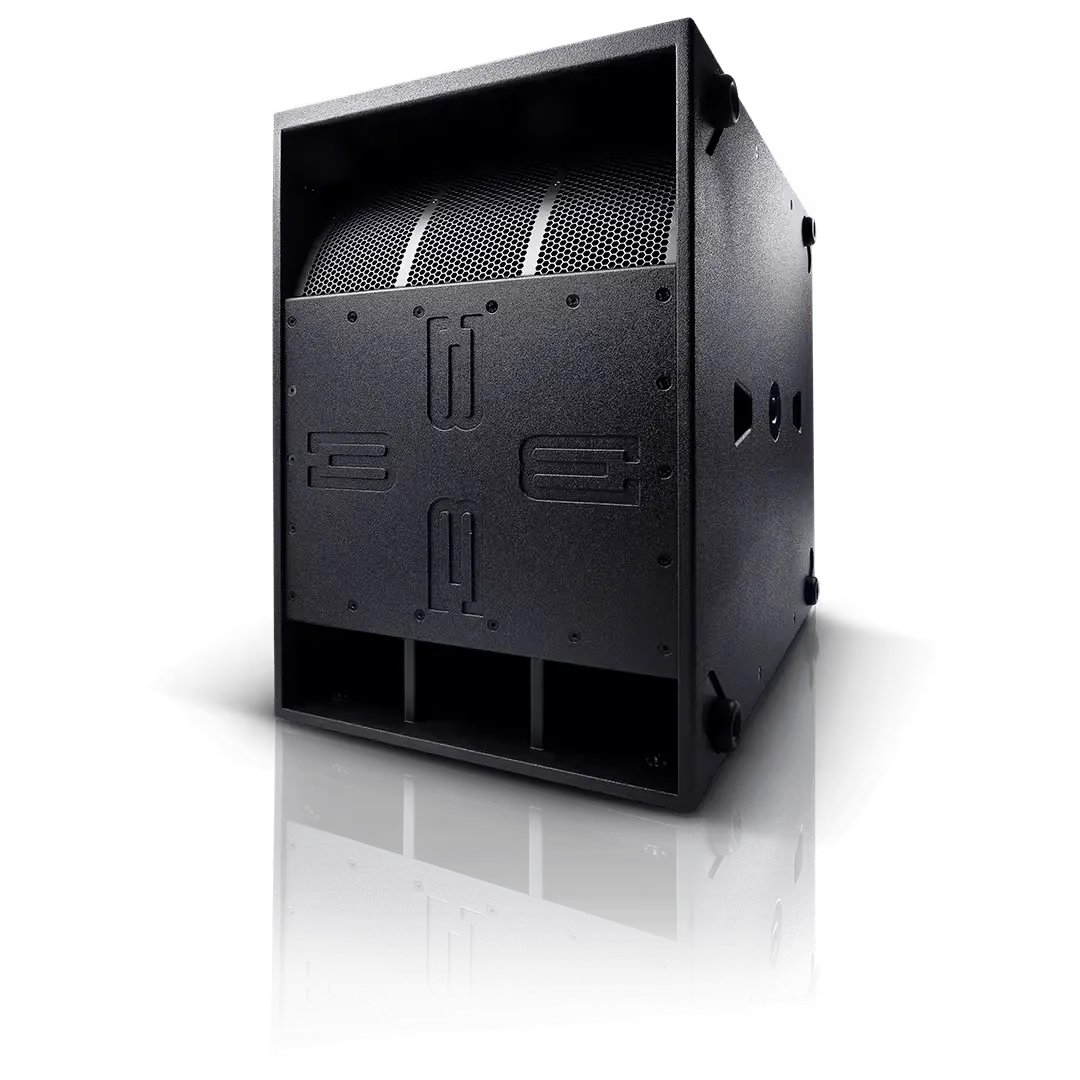
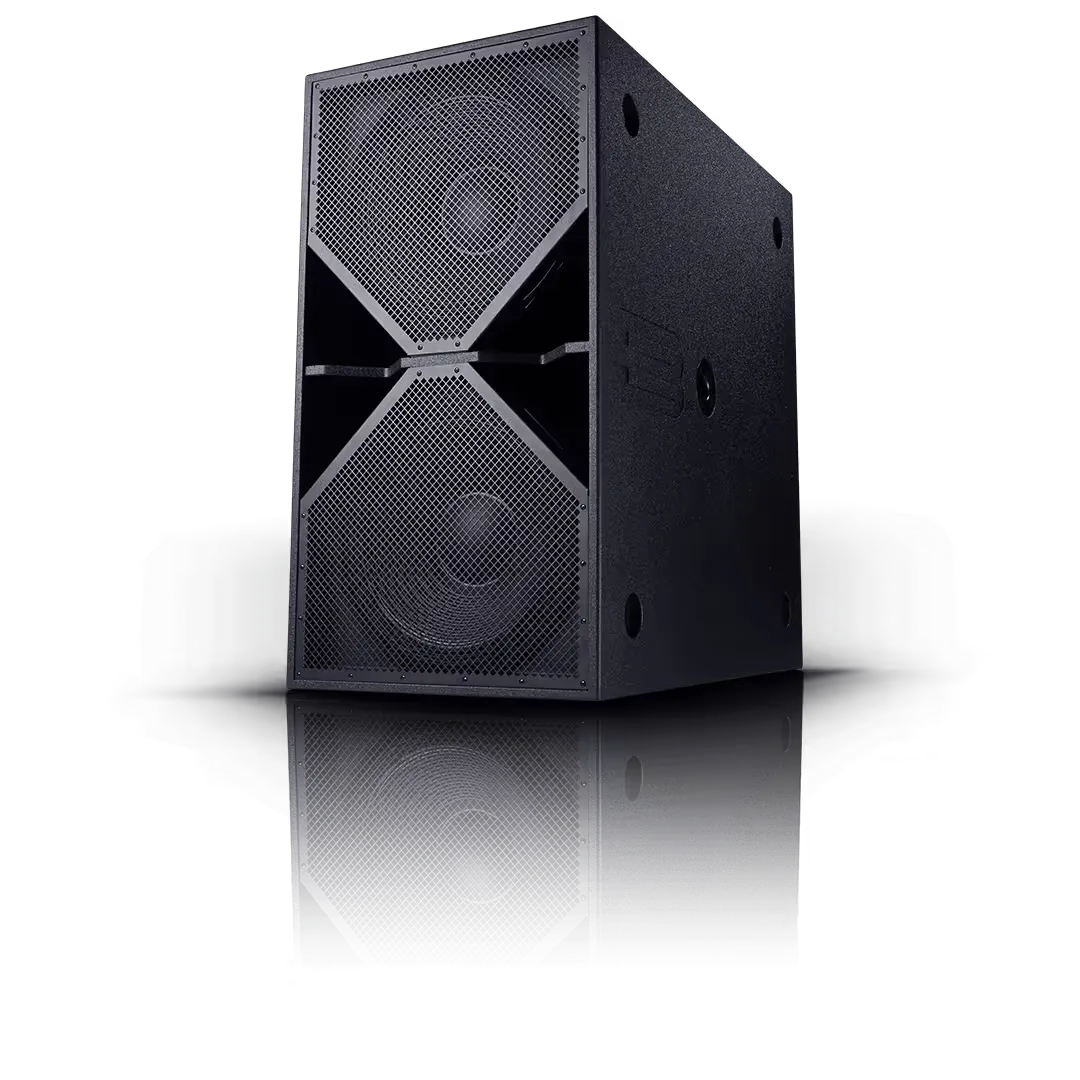
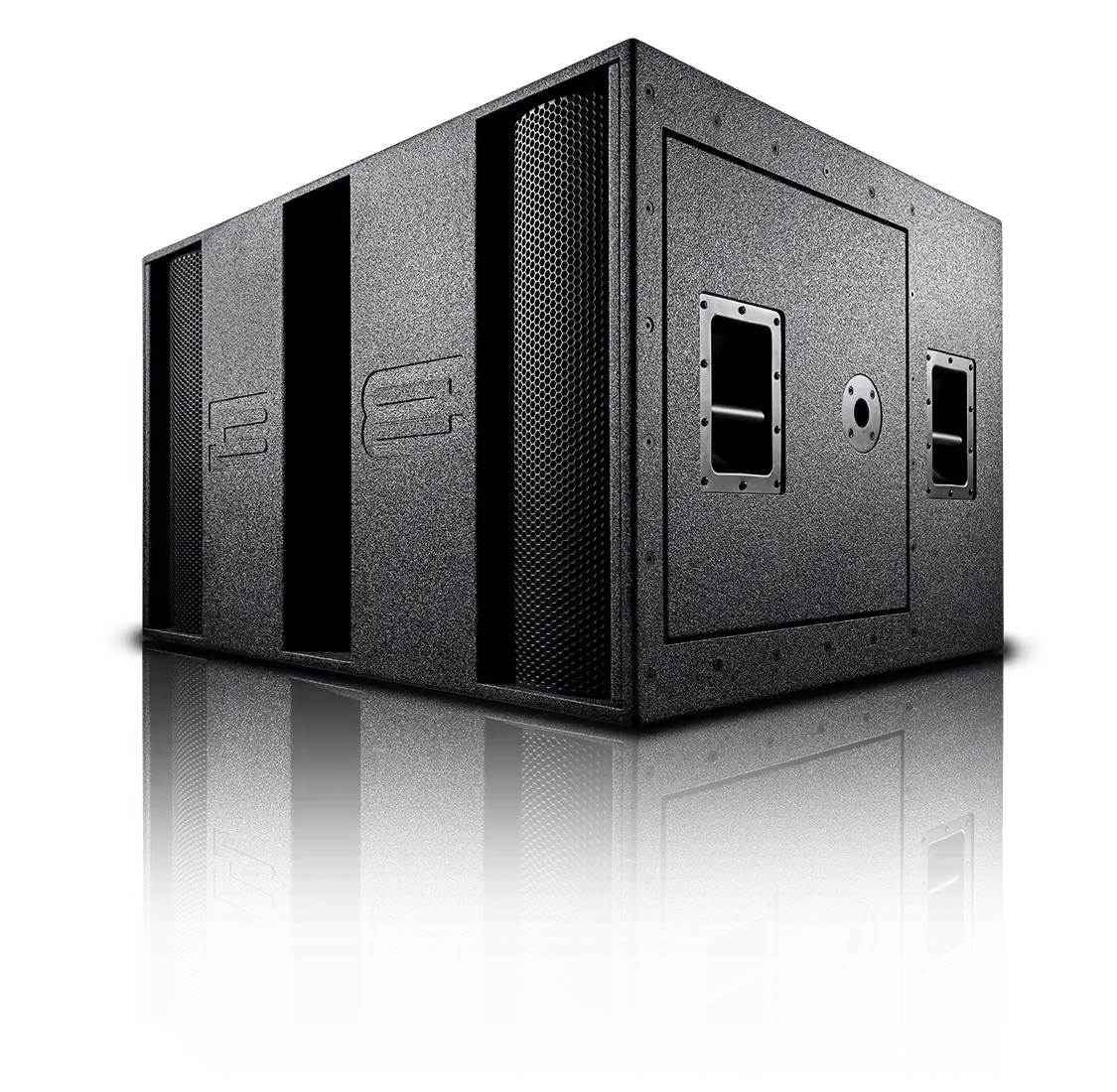
A vented hybrid subwoofer, like the BASSBOSS VS21-MK3, combines a front-loaded short horn section (for sensitivity and punch in the upper bass range) with a large vented rear chamber tuned low (for extension and air movement). You get the best of both worlds: the attack character of a horn-loaded design with the extension of a vented design.
The result is a cabinet that reaches 28 Hz flat, loads into the back of an SUV, and delivers output that approaches a double-18" subwoofer array, from a single cabinet that one person can move with a dolly.
Add onboard DSP with presets optimized for that exact driver and cabinet combination, a built-in Class-D amplifier with auto-sensing power supply, and network control via ControlBASS: you've eliminated the external rack, the external processor, and the separate amplifier that horn-loaded systems require.
The furniture moving era is over.